Label Automation in the Industry 4.0 Era: From Smart Lines to Unmanned Factories
As machine vision, IoT sensor networks, and AI algorithms permeate every stage of label production, this $50-billion global industry is undergoing a silent yet total paradigm revolution.
Every leap in industrial revolution has redefined the boundaries of manufacturing. From steam-powered mechanization to electrified mass production, from computer-controlled automation to today's fourth industrial revolution — Industry 4.0, built on Cyber-Physical Systems (CPS) — manufacturing has continuously ascended along the three axes of efficiency, precision, and intelligence. And in this profound transformation, the labeling industry — a seemingly traditional sector that nonetheless connects the lifelines of global supply chains — is experiencing an unprecedented technological reconstruction.
For decades, label production has been regarded as a niche within the printing industry, its core workflow — from prepress design and platemaking to printing, die-cutting, and application — following a paradigm that remained essentially unchanged. Operators relied on experience to set up machines, inspected quality with the naked eye, and manually recorded output. This human-dependent production model has proven increasingly inadequate in the face of small-batch, high-mix flexible demand. The arrival of Industry 4.0 is fundamentally disrupting this traditional landscape.
How Industry 4.0 Reshapes Label Production
Understanding Industry 4.0's impact on the labeling industry requires first examining its four technological pillars: Connectivity, Information Transparency, Technical Assistance, and Decentralized Decision-Making. In the context of label production, these pillars map as follows:
Connectivity means that every press, slitter, die-cutter, and labeling machine is no longer an information island but is connected to a unified data bus via industrial protocols like OPC UA and MQTT. The tension control data from a Mark Andy Evolution Series flexo press, the UV ink curing parameters from a Gallus Labelfire 340, the digital front-end job queue from a Heidelberg Versafire — these signals, once locked inside individual PLCs, can now be collected, aggregated, and correlated at millisecond-level granularity.
Information Transparency demands that this raw data be transformed into semantically meaningful information that production managers can understand. By constructing a Digital Twin of label production, managers can mirror the physical line's operating state in real time within a virtual environment — from anilox roller wear levels in each print station, to cumulative die-cut counts, to per-meter winding tension fluctuation curves — all rendered on visual dashboards.
"Industry 4.0 is not about replacing humans with machines. It's about giving every machine the intelligence to make autonomous decisions, and making every label's production traceable, predictable, and optimizable.
Automatic Labeling Systems: Architecture & Selection Guide
The Automatic Labeling System (ALS) is the most user-facing automation module in an Industry 4.0 label factory. A modern ALS is far more than a simple "peel-and-apply" mechanical device — it is a complex system integrating servo motion control, machine vision positioning, real-time communication, and edge computing capabilities.
From an architectural perspective, a high-end ALS typically comprises the following subsystems: a Label Feed Module — including unwind tension control, label gap detection, and automatic web-guiding, ensuring label stock enters the application station at constant tension and precise pitch; an Dispensing & Application Module — employing one of three primary methods: Air-Blow, Wipe-On, or Tamp-Blow to separate labels from the liner and apply them to the product surface with accuracy within ±0.5mm; and a Vision Verification Module — using high-speed cameras immediately after application to verify label position, angle, and content correctness.
Selection Guide: Three Primary Application Methods
- 01. Air-Blow: Compressed air "blows" the label onto the product surface. Suited for flat or slightly curved products, achieving speeds up to 1,200 units/min, though ultra-thin film labels may drift.
- 02. Wipe-On: Labels are guided by rollers in a wiping motion onto the product. Ideal for continuous-motion lines (e.g., cartons on conveyors), offering excellent speed stability but requiring flat product surfaces.
- 03. Tamp-Blow: Vacuum suction holds the label on a tamp pad, then a pneumatic cylinder presses it precisely onto the product. Highest accuracy (±0.3mm), suited for pharma and electronics, but speed limited to ≤600 units/min by cylinder stroke.
Selection decisions should not focus solely on the two obvious metrics of speed and accuracy. Within the Industry 4.0 framework, a system's data output capabilities are equally critical: Does the equipment support OPC UA for real-time data reporting? Does it have edge-side AI inference capabilities for localized anomaly detection? Can it seamlessly interface with upstream MES (Manufacturing Execution Systems) and downstream WMS (Warehouse Management Systems)? These "soft" capabilities often deliver far greater long-term operational value than marginal differences in hardware specifications.
Machine Vision: The Third Eye of Label Quality
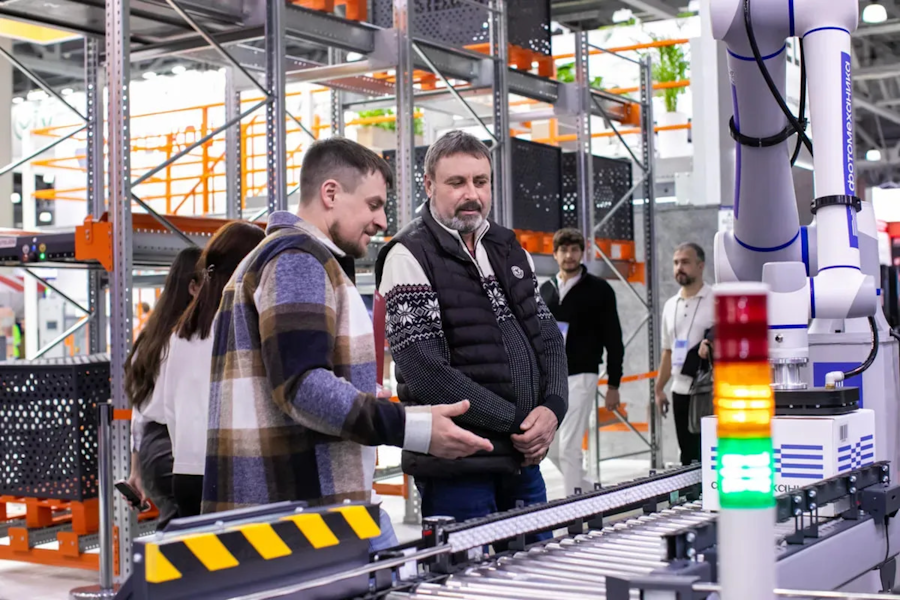
If automatic labeling solves the question of "how to apply efficiently," machine vision addresses "how to ensure every single label is perfect." In traditional label production, quality inspection is heavily dependent on the human eye — an experienced inspector can identify common defects such as mis-registration, text voids, and ink spatter at production speed. However, human visual inspection faces three insurmountable physical limits: sustained attention degradation (significant decline after approximately 30 minutes), resolution bottlenecks for micro-defects (human eye limit ~0.1mm), and consistency issues with subjective judgment.
Modern label inspection vision systems typically employ line-scan CCD/CMOS cameras at 8K or even 16K resolution, performing 100% full-web scanning of every label at full production speed. Consider a flexo press running at 200m/min: a 16K line-scan camera at 0.02mm pixel resolution can capture the full-width image of a 320mm-wide label — meaning every 0.02mm × 0.02mm area is independently inspected, leaving no micro-defect invisible.
The core algorithms of vision systems have migrated wholesale from traditional rule-driven methods like template matching and edge detection to deep learning-driven defect classification frameworks. Convolutional Neural Networks (CNNs), trained on tens of thousands of label defect samples, can distinguish dozens of defect types at over 99.7% accuracy: Knife Lines, Ink Spray, Color Deviation, Mis-register, Bubbles, Wrinkles, Missing Text, and more. Crucially, deep learning models can identify defects in the "gray zone" — borderline cases where the human eye struggles to determine pass/fail — and automatically classify them according to preset quality tiers.
"Machine vision isn't replacing the inspector's eyes — it's replacing the inspector's brain. It doesn't just see defects; it understands their root causes and predicts their evolution.
IoT Sensors: Weaving the Factory's Neural Network
If machine vision is the label factory's "eyes," then the IoT sensor network distributed throughout the production floor is its "nervous system." On a complete label production line, the variety and density of sensors far exceeds most people's expectations.
Temperature and humidity sensors monitor the shop-floor microenvironment, ensuring optimal UV ink curing conditions and pressure-sensitive adhesive coating process windows. Tension sensors measure material tension in real time from unwind to rewind, with precision of ±0.1N, preventing material stretch deformation or slack wrinkling. Colorimetric sensors (spectrophotometers) measure printed color L*a*b* values inline, ensuring inter-batch color deviation ΔE ≤ 1.5 (below the human perceptibility threshold). Vibration sensors, mounted on critical rotating components, use spectrum analysis to predict bearing wear and gear mesh anomalies. Flow sensors precisely meter ink and adhesive consumption rates, providing data inputs for JIT (Just-in-Time) supply systems.
These sensors generate massive data streams at millisecond sampling frequencies. A mid-scale label line can produce tens of gigabytes of data per day. Extracting actionable operational insights from this data torrent is a core data engineering challenge for Industry 4.0 label factories. Edge computing gateways play a critical role — deployed line-side, they preprocess raw sensor data, extract features, and detect anomalies, uploading only compressed and annotated key event data to the cloud or on-premise data lake, dramatically reducing bandwidth requirements and cloud compute costs.
IoT Architecture: Three-Layer Data Topology
- L1 — Perception Temperature, humidity, tension, color, vibration, and flow sensor nodes. Sampling at 1kHz–10kHz, connected to fieldbus via IO-Link or EtherCAT.
- L2 — Edge Industrial gateways/edge servers running RTOS, performing data preprocessing, feature extraction, and local alerting at <10ms latency. Protocol translation: Modbus/Profinet → OPC UA/MQTT.
- L3 — Platform Private/hybrid cloud deploying time-series databases (InfluxDB/TimescaleDB), running big data analytics engines and ML model training pipelines. Supports historical playback and trend forecasting.
AI-Driven: From Defect Detection to Predictive Maintenance
Artificial intelligence applications in label production have expanded far beyond visual inspection alone. Machine learning and deep learning algorithms are extending upstream and downstream across the production process, constructing an intelligent decision framework spanning the entire "Predict — Optimize — Detect — Trace" chain.
Root cause analysis of print defects is among AI's highest-value applications in label production. After traditional inspection identifies a defect, an experienced technician often needs multiple rounds of machine adjustment to locate the source — is the anilox roller clogged? Has ink viscosity drifted? Is plate pressure uneven? AI systems perform multi-dimensional correlation analysis between defect image features and real-time process parameters (ink temperature, viscosity, plate pressure, speed, tension), delivering root cause diagnosis and parameter adjustment recommendations within seconds.
Predictive Maintenance represents another transformative capability AI brings to label factories. Through continuous monitoring of equipment sensor data and machine learning modeling, systems can issue warnings days or even weeks before a failure actually occurs. For example, by analyzing the combined features of a press main drive motor's current waveform, temperature trend, and vibration spectrum, AI models can predict bearing Remaining Useful Life (RUL) with accuracy at the ±48-hour level. This enables maintenance teams to replace components during planned downtime windows rather than being forced into emergency shutdowns during peak order periods.
Adaptive process parameter optimization represents AI's most advanced application in label production. Reinforcement Learning-based control strategies allow presses to automatically fine-tune process parameters based on real-time feedback — when rising ambient temperature causes ink viscosity to drop, the system automatically reduces ink pump speed; when a substrate batch change alters surface energy, the system automatically adjusts corona treatment power and plate pressure. This "self-learning, self-adapting" capability is transforming label printing from a craft dependent on artisan experience into a quantifiable, replicable, and continuously optimizable engineering discipline.
MES Systems: The Digital Nerve Center
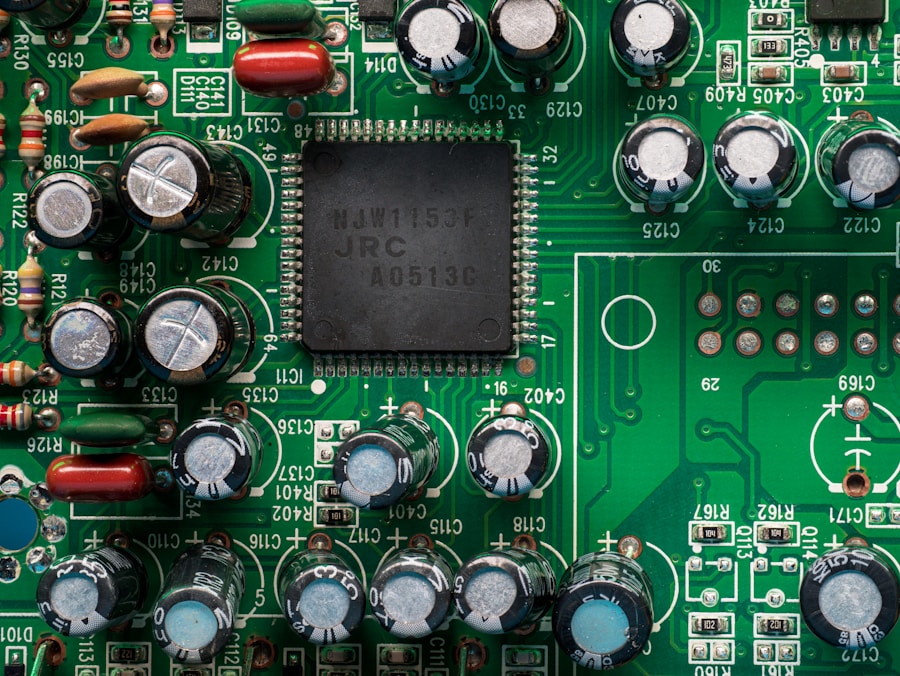
The Manufacturing Execution System (MES) is the critical middleware connecting the ERP (Enterprise Resource Planning) layer with the shop-floor equipment layer, serving as the "digital nerve center" in Industry 4.0 label factories. An MES system customized for the label industry extends far beyond the capabilities of generic MES platforms.
Intelligent scheduling from order to line is a core MES capability. Label production scheduling complexity far exceeds most discrete manufacturing industries — a single flexo press may need to switch between more than a dozen jobs in a single day, each changeover involving plate changes, ink changes, material changes, and color matching. The MES APS (Advanced Planning & Scheduling) module considers dozens of constraints including equipment capability matrices, order priorities, material availability, and color sequencing (light to dark to minimize wash-up time), automatically generating optimal production schedules that reduce changeover time by 30%–50%.
Real-time OEE monitoring displays the three dimensions of Overall Equipment Effectiveness — Availability, Performance, and Quality — as real-time data streams on shop-floor displays and managers' mobile devices. When any machine's OEE shows abnormal decline, the MES automatically triggers alerts with correlated root cause analysis: Is availability down due to unplanned stops? Is performance lost due to sub-rated speed? Or has quality deteriorated from rising scrap rates?
Seven MES Integration Interfaces for Label Production
- 01. ERP Integration (SAP/Oracle): Order sync, BOM distribution, cost feedback.
- 02. Prepress Workflow Integration (Esko/Hybrid): Automatic artwork file delivery to RIP, eliminating manual file transfer.
- 03. Equipment Data Acquisition (OPC UA/MQTT): Real-time capture of press, slitter, and die-cutter operating parameters.
- 04. Vision Inspection Integration: Receives defect reports, automatically triggers reject removal and batch traceability.
- 05. Warehouse Management (WMS): Raw material disbursement linkage, finished goods auto-registration.
- 06. Quality Management (QMS): SPC statistical process control data auto-collection, compliance report generation.
- 07. Energy Management (EMS): Per-order energy accounting, carbon footprint tracking.
End-to-end traceability is the most compliance-critical capability MES delivers to label production. In regulated industries like pharmaceuticals and food, regulations require that every label be traceable to its raw material batch, printing equipment, operator, process parameters, and inspection records. MES assigns a unique serialized identifier to each production batch and automatically associates all relevant data throughout the production process, constructing a complete, tamper-proof digital trace chain.
The Unmanned Label Factory: Vision and Practice
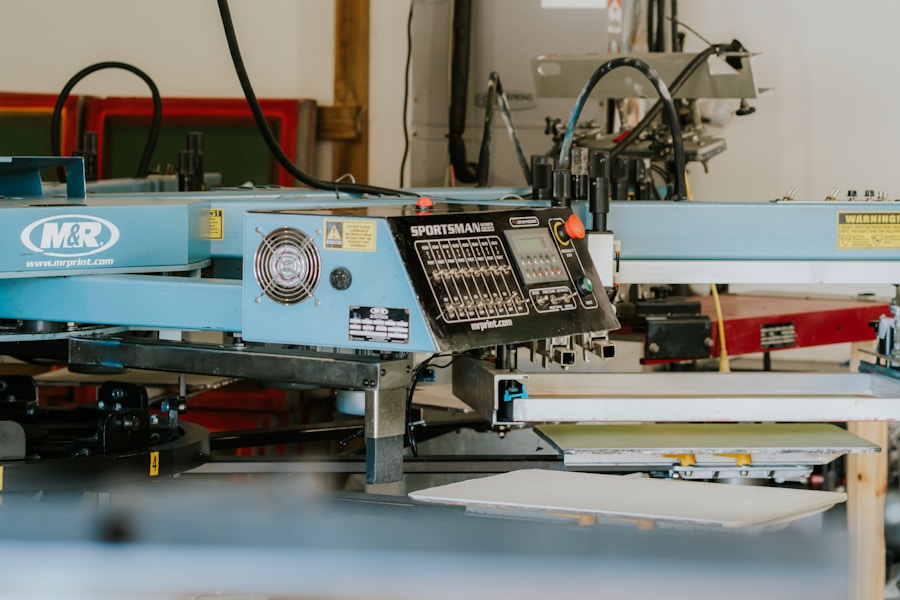
The "Lights-Out Factory" — a fully automated, unmanned production facility — has long been regarded as manufacturing's ultimate vision. In the labeling industry, this vision is transitioning from concept to reality, though fully unmanned operations still face several challenges.
Several label companies worldwide have already achieved near-unmanned operations on specific lines. Japan's Lintec Corporation deployed a fully automated line at its flagship Saitama Prefecture facility, running from automatic raw material loading through to finished label packaging. The line requires only 2 monitoring personnel (compared to 12 for a traditional line), with overnight shifts running fully unattended for 8 hours. Key enabling technologies include AGVs (Automated Guided Vehicles) for automatic roll transport and loading, machine vision systems replacing all manual inspection stations, and Auto-Splicing systems that automatically join rolls when material runs out without stopping the press.
European label giant Multi-Color Corporation (now part of CLONDALKIN Group) demonstrated an alternative path to unmanned operations at its German facility: through "Digital Color Matching" technology, an AI system automatically calculates ink formulations based on target color values and drives automatic ink dispensing systems to complete mixing, thereby eliminating the most time-consuming and experience-dependent step in traditional printing — color matching. This single technology application alone reduced changeover preparation time by over 60%.
"An unmanned factory doesn't mean you don't need people. It means liberating humans from repetitive labor so they can focus on higher-value work — process innovation, customer service, and strategic decision-making.
However, full unmanned operation still faces several bottlenecks. First is the challenge of material diversity — the label industry uses a vast range of substrates (paper, PE, PP, PET, PVC, aluminum foil, fabric, etc.), with dramatically different physical properties, and automated systems' universal adaptability still has room for improvement. Second is the short-run trend — brand owners' demand for label personalization is growing, with run lengths shrinking from hundreds of thousands of meters to thousands or even hundreds, placing extreme demands on automated systems' flexible changeover capabilities.
Looking ahead, the continued maturation of digital printing technology (particularly further optimization of inkjet speed and cost) will be the key engine accelerating the deployment of unmanned label factories. Digital printing inherently requires no plates, no color matching, and no plate changes — it fundamentally eliminates the most human-dependent steps in traditional printing. When a fully digital label line is completely integrated with MES, machine vision, AGV, and automatic packaging systems, 24/7 unmanned operation will no longer be a concept but a verifiable engineering reality.
Implementation Roadmap: From Pilot to Scale
For label companies considering an Industry 4.0 transformation, we recommend a "three-phase progressive" strategy:
Phase 1 (6–12 months): Data Collection & Visualization — Deploy IoT sensors and data acquisition gateways on existing lines, establish real-time production monitoring dashboards, and accumulate historical production data. ROI in this phase comes primarily from transparency into equipment utilization and downtime root causes, and data-driven lean improvement.
Phase 2 (12–24 months): Intelligence Upgrade — Introduce machine vision inline inspection systems, deploy MES for end-to-end order traceability, and begin piloting AI-assisted process optimization and predictive maintenance. ROI comes from dramatically reduced scrap rates and significantly fewer unplanned downtime events.
Phase 3 (24–36 months): Automation Integration — Implement automated material handling systems (AGV/AMR), upgrade to automated labeling and packaging lines, advance deep MES-ERP-WMS integration, and ultimately achieve unmanned operation on specific lines or specific shifts.
Industry 4.0 is not an overnight revolution but a journey of continuous iteration. For the labeling industry, the destination of this path is not a cold "unmanned factory" but a new production paradigm where humans and machines collaborate deeply, data and experience reinforce each other, and efficiency and flexibility coexist. Standing at the starting line of this transformation, every label company must answer a fundamental question: not "whether to embrace Industry 4.0," but "how to join this irreversible wave of industrial upgrade at the pace and path best suited to your business."